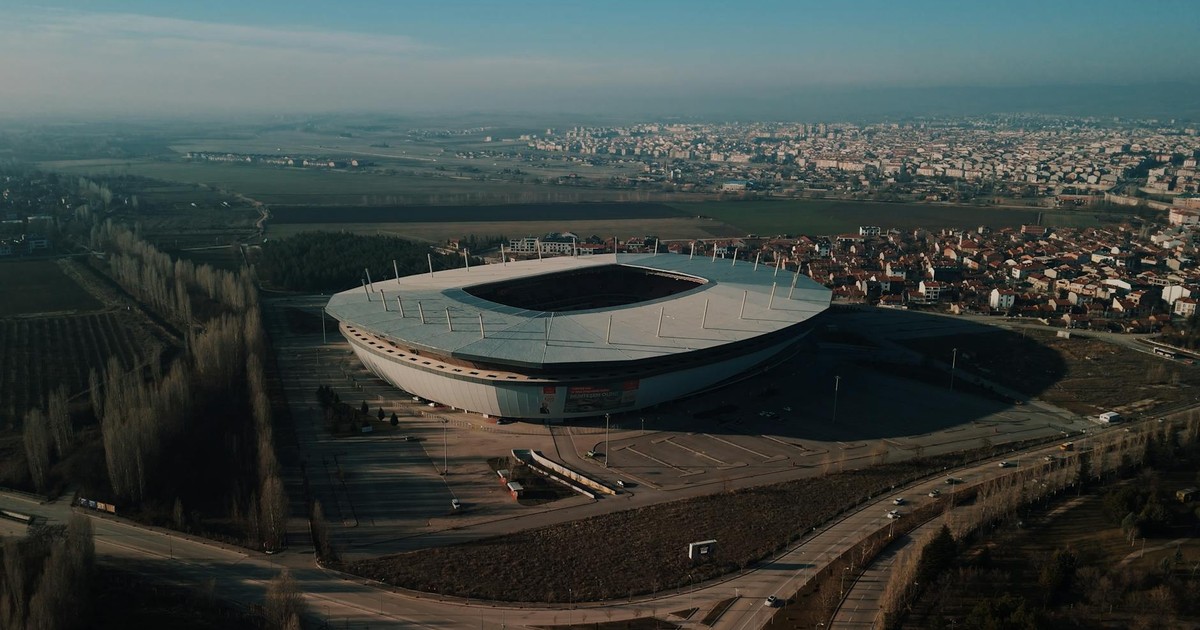
It finished exactly as it should have: a grey, drizzly December afternoon watching my team get hammered 3-0 in a gleaming new stadium named after an international commercial law firm. A last-minute winner would have felt too poetic. This was the raw, unvarnished reality of completing the 92—a journey that began in 1982 on a crumbling terrace and spanned 43 years of football fandom. Most games were as an away Nottingham Forest supporter; others as a neutral. What unfolded was a ludicrous yet wholly fulfilling enterprise, teaching me more about the game’s soul than any trophy lift ever could.
Start with the basics of allegiance. Once, you displayed your loyalty by carefully trapping a scarf in the car window, letting it flutter all the way to the ground. Today, that’s been replaced by the executive car sticker or personalised number plate—a shift that speaks volumes about our society’s drift toward sterile branding. We’ve traded communal identity for individual statement, and the atmosphere is poorer for it.
Location matters, too. Finding a ground within walking distance of a town centre now feels like a rare delight—a proper big day out. It fosters a sense of place: you know where you are, you feel embedded in a community. That connection evaporates when you’re trudging through an industrial estate on the ring road or a soulless science park. Apologies—of a kind—to Colchester, Oxford, and Shrewsbury. A hat-tip to Luton, Peterborough, and Sheffield United, who’ve kept their roots in the heart of things.
Then there’s the pre-match ritual. We all know about Griffin Park and its famed pub for each corner, but by the time of the ground’s last throes, not all were still open. Pubs nearest grounds have been closing at an alarming rate, victims of shifting habits and club economics. Football clubs, increasingly preoccupied with footfall, ask themselves how to squeeze more money from fans. The answer? Get them to buy their beer inside the ground. Modern stadiums now build bars into fancy new stands—some quite good, especially when there are no pubs within walking distance. It’s a pragmatic solution, but it chips away at the traditional matchday ecosystem.
On the terraces, change has been more welcome. You can still find many terraces behind a goal to stand on, and higher up the leagues, safe standing is now commonplace. This poses a simple question: how hard was it to implement in the first place? The period between safe standing seeming weird and fantastical to it being ubiquitous was brief. Football fans can have nice things without breaking them—a lesson learned belatedly but well.
There’s magic in the mundane, too. How wonderful to visit new grounds and recreate famous goals in your head: that goalmouth is where Jimmy Glass scored to preserve Carlisle United’s League status. There should be virtual blue plaques for this kind of thing. And there’s delight in losing track of the game while Googling Percy Ronson (Fleetwood) or Eric Whalley (Accrington) to find out why they’re so revered that they have a stand or bar named after them. These quirks are football’s hidden curriculum.
Enter the modern ultra. For so long, we envied German supporters for their flag-waving, constant chanting, and sense of identity. But rather than taking the best bits and moulding them to their own club, some fans have simply copied it. Anything to bring atmosphere is welcome, yet the practice of wearing a uniform—invariably all black—to assert fandom seems odd. It carries a whiff of superiority, as if to say: we are the proper fans, and you can’t be in our club until you wear all black and jump up and down a lot. You might even be questioned in a pub to see if you have the right vibe. Most clubs now have their own baby squad—Barrow’s are clearly visible, surging toward away fans when their team scores at the Holker Street End. By all means, wave a flag, sing songs, but is a uniform really necessary?
Big flags are everywhere now, and clubs even have official big flag wavers. It looks spectacular when a huge flag surfs from one end of a stand to the other while others are waved elsewhere. But like safe standing, why were we told for so long they weren’t welcome? They were frowned upon and discouraged; anyone daring to wave a flag was pounced on by eager stewards. It’s still difficult to get such a flag into a game without prior permission. Clubs want the spectacle but also want to own it, to make it official—as if supporters can’t be trusted to wave flags correctly. More big flags, please, but let the fans sort it themselves.
Off the pitch, bargain bins in club shops toward season’s end hold treasure. You can pick up unusual memorabilia, and it’s the perfect time to bag a shirt as clubs divert eyes to the new kit. Kudos to Walsall for selling theirs for as little as a tenner, with Poundland emblazoned on the front—a nod to affordability in an era of skyrocketing costs.
Speaking of sponsors, one way to alleviate a tedious game is to note the advertising hoardings. Speculate on what Betterwave at Accrington does, or ponder how reliable D Catchesides Roofing in the Bromley area are. The huge Britcon hoarding at Scunthorpe conjures questions about contemporary political and social issues. Scan a stadium hard enough—especially in the north-west—and you’re never far from a Rainham Steel advert. These are the silent storytellers of modern football.
Organised fireworks displays are definitely an event in the lower leagues. Who knew they were so heavily advertised? Who knew they were a thing? Such events are promoted more than Elton John gigs in provincial grounds. And like ultra culture, flag-waving, and safe standing, murals around grounds have finally entered the football mainstream. They make the traditional walk around a new ground enticing—you might even seek out one you’ve seen online. These murals create a sense of identity in a warm, inviting way: “Come and see who our heroes are around here.” You stand there nodding, thinking: “Yeah, he was some player, wasn’t he?”
Yet amid all this change, constants remain. In late autumn, you enter a ground in hazy sunshine and exit into a dark, wintry blackness. It makes you feel you’ve achieved something with your Saturday. “Do anything nice at the weekend?” will come the universal work colleague question on Monday. Yeah. Yeah, I definitely did. After 43 years and 92 grounds, that feeling never gets old.