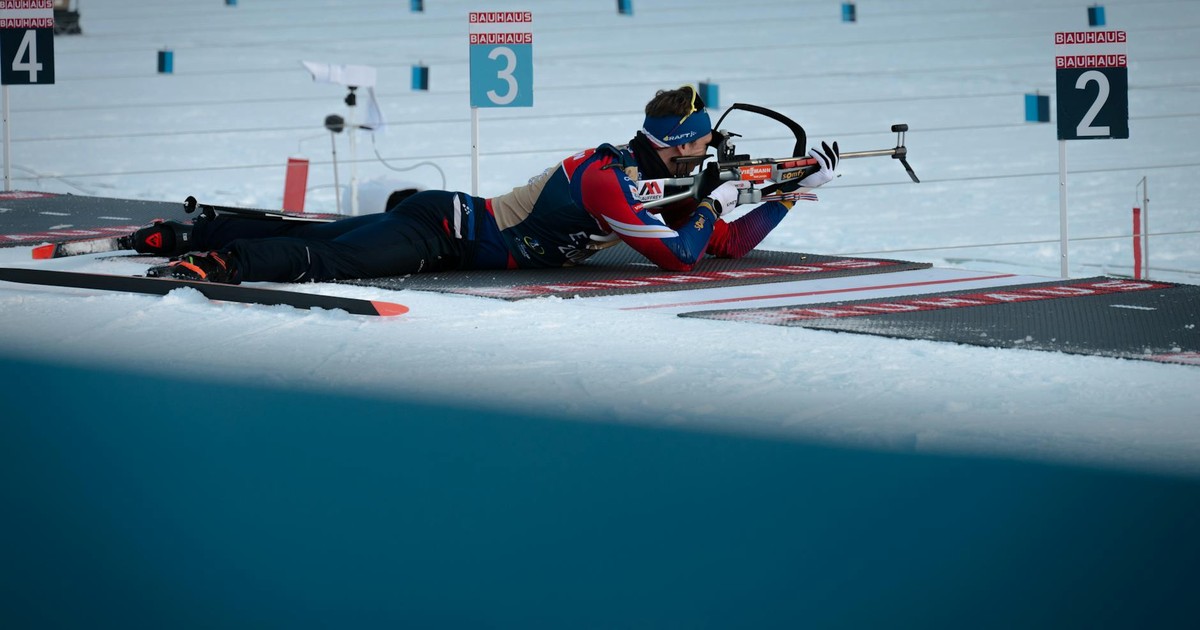
Johannes Høsflot Klæbo didn’t just win at the Milano Cortina 2026 Winter Olympics—he rewrote the record books. The Norwegian cross-country skier seized six gold medals, a single-Games haul that surpassed Great Britain’s entire medal count. One viral clip captured him sprinting uphill at a six-minute-mile pace on skis, a testament to raw power that left the sporting world in awe. Klæbo’s dominance crowned him the undisputed star of these Games, a force so relentless that other athletes seemed to be competing for silver.
Great Britain’s Matt Weston delivered under immense pressure, claiming double gold in skeleton. His victory in the mixed team relay was particularly clutch, as he clawed back a three-tenths-of-a-second deficit to secure GB’s third gold. The emotion post-race said it all—a hard-fought triumph that resonated across the nation. Yet, heartbreak struck nearby: Freya Tarbit and Marcus Wyatt, GB’s second skeleton relay team, finished fourth, their visible sadness a stark reminder of Olympic margins.
Alysa Liu’s figure skating gold was a masterclass in joy. The American embraced Japan’s Ami Nakai after scores were announced, sealing Liu’s gold and Nakai’s bronze in a moment of pure sportsmanship. Liu’s return to elite sport on her own terms reminded everyone that sport, at its core, is about passion. Meanwhile, Ilia Malinin, the red-hot favorite, fell twice in his free skate but still nabbed a team gold and performed a backflip in the gala—a rollercoaster of highs and lows.
Eileen Gu added three more medals to her collection, including an extraordinary halfpipe gold. Love her or question her, Gu dominated headlines and even drew commentary from JD Vance. On the ice, Japan’s Riku Miura and Ryūichi Kihara—dubbed RikuRyū—captured free skate gold with a stunning performance, while men’s champion Mikhail Shaidorov amused crowds by dressing as a panda in the gala. The event itself, packed with drones capturing speed and drama, proved a crowd-pleaser.
Controversy flared in curling when Canada’s Marc Kennedy told the Swedish team to “fuck off” after cheating accusations. The boos that followed became a spectacle of their own. Off the ice, the IOC grappled with political expression, caught between neutrality and athletes’ identities. Ukrainian skeleton racer Vladyslav Heraskevych gave up his Olympic dream after being banned from wearing his “helmet of memory,” a move that sparked more discussion than any race could have.
Sustainability promises fell flat for many. The Games’ “green” branding—biodegradable cutlery, electric cars—clashed with reports of drained rivers, felled trees, and gouged mountains. Logistical sprawl also drew ire, with venues spread across distances akin to New York to Pittsburgh, making it nearly impossible for fans to see everything. Empty seats at San Siro’s opening ceremony, where athletes were hundreds of miles away, underscored the disconnect.
Elana Meyers Taylor made history at 41, becoming the oldest Winter Olympic champion in an individual event by winning women’s monobob gold. She used sign language to share the moment with her deaf sons, a victory for Black athletes, mothers, and the deaf and Down’s syndrome communities. Haiti’s alpine skier Richardson Viano brought pure joy, celebrating a slalom run with dance moves that electrified the Bormio crowd.
Kirsty Muir’s two fourth-place finishes in freeski left British fans gutted, especially when Italy’s Flora Tabanelli—who tore an ACL in November—landed a miraculous final trick to edge her out. Muir’s fire, however, burns bright for France 2030. Other names to watch include Japan’s 17-year-old Rio Nakata, Albania’s Lara Colturi, Canada’s 19-year-old Macklin Celebrini, and Dutch speed skater Jorrit Bergsma, who at 44 might defend his mass start title.
New sports sparked debate. Cross-country running and cyclo-cross are likely for 2030, but voices called for fell running, skimo-style events, and women’s Nordic combined—the last Olympic discipline without gender equality. Fun picks included Yukigassen (Japanese snowball fighting), snow volleyball, and ice cross downhill, a thrilling blend of snowboard cross on skates with sharp turns and steep drops.
In three words, these Games were exhilarating, newsy, and fun—or as one observer put it, “Never too old.” From Klæbo’s reign to Kennedy’s curses, Milano Cortina 2026 delivered drama, joy, and a few lessons in sustainability. The stage is set for France 2030, where new stars and sports will aim to top this spectacle.