
The New Frontier: Where Fabric Meets Fluid Dynamics
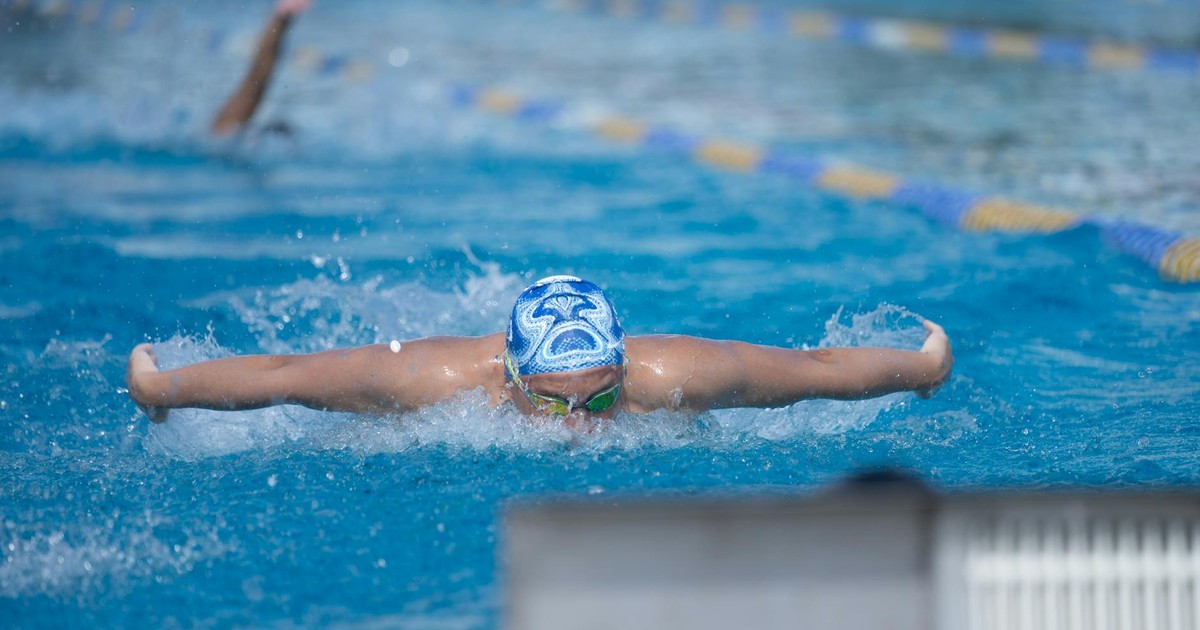
For decades, the quest for Olympic swimming gold was a battle fought in the gym and the pool, a test of raw human power and endurance. Today, that battle is increasingly waged in wind tunnels and computer labs. The surface of the Olympic pool may look the same, but beneath the water, a silent technological revolution is propelling athletes to times once deemed impossible. The modern era of swimming is defined by two intertwined pillars: advanced hydrodynamic suit engineering and granular, real-time stroke data analytics. Together, they are not just breaking records; they are redefining the very biomechanics of speed in water.

The Evolution of the Second Skin: From LZR Racer to Bespoke Hydrodynamics
The seismic shift began in earnest with the 2008 Beijing Olympics and the introduction of Speedo’s LZR Racer. Its polyurethane panels, welded seams, and compression effect created a sensation, contributing to a staggering 98% of gold medals and a cascade of world records. The subsequent “supersuit” era, culminating in the 2009 World Championships, saw full polyurethane suits that maximized buoyancy and reduced drag so effectively that FINA, the sport’s governing body, was forced to intervene. The regulations that followed banned non-textile materials and set limits on suit coverage, but they did not end innovation—they refined it.
Modern Suit Technology: A Multi-Layered Approach
Today’s elite racing suits are marvels of textile engineering, operating within strict rules to deliver a legal edge. The focus is on three core principles:
- Drag Reduction: Fabric surfaces are engineered with microscopic textures or patterns that mimic shark skin (dermal denticles), disrupting turbulent water flow and creating a thinner, faster-moving boundary layer next to the swimmer’s body. Seams are laser-welded or bonded to lie perfectly flat.
- Compression & Muscle Oscillation Control: High-compression fabrics provide targeted support to core and key muscle groups. The science suggests this can reduce muscle vibration (oscillation), which wastes energy, and may enhance proprioception—the body’s awareness of its position in the water.
- Fit & Seam Placement: Suits are now custom-fitted or come in a vast array of sizes to eliminate any wrinkle or bagginess that could create drag. Strategic seam placement is designed to align with a swimmer’s specific body contours and stroke mechanics.
Brands like Arena with its Powerskin Carbon-Ultra and Speedo with the Fastskin LZR Intent tout multi-zone constructions. Different panels on the suit serve different functions: some for maximum compression, others for flexibility in the shoulders, and specific textured zones on the forearms, calves, and lower back where water flow is most disruptive.
Data Dive: The Quantified Stroke
While the suit is the visible tech, the invisible revolution lies in data. Elite swimmers and coaches are no longer reliant on stopwatches and gut feeling. They are immersed in a constant stream of biometric and hydrodynamic feedback that breaks down every aspect of performance.

Key Metrics Driving Performance Analysis
Sophisticicated sensor systems, both wearable and embedded in pools, track a matrix of critical data points:
- Stroke Rate & Stroke Length: The fundamental trade-off. Analytics identify the optimal balance for each swimmer’s physiology and event distance. Is a higher, shorter stroke or a longer, more powerful glide faster?
- Velocity Analysis: Instantaneous speed tracking throughout the length of the pool reveals where a swimmer accelerates or decelerates within a single lap—often at turns or during breath cycles.
- Wall Performance: Sensors measure push-off force, underwater dolphin kick speed and distance, and breakout timing to the millisecond, turning the turn into a measurable weapon.
- Force & Power Output: Wearable devices or instrumented start blocks can estimate the force applied at the start and through each pull, measuring power output directly.
The Tools of the Trade
This data is gathered through an array of technologies. Underwater sonar systems like the Trainesense tracker follow a swimmer’s movement with pinpoint accuracy. Smart goggles can display real-time split times. High-speed, multi-angle video capture synchronized with data streams allows coaches to visually link a technical flaw to a dip in velocity. AI-powered software then processes this information, identifying patterns and suggesting technical adjustments that might escape the human eye.
The Convergence: Tailored Tech for Individual Gold
The true power is realized when suit technology and data analytics converge to create a personalized performance ecosystem. Data informs suit design and selection, and the suit’s effect is then measured by the data.
For instance, a swimmer’s stroke data might show a slight drop in hip position during the final 15 meters of a 100m race. A suit designer can use this information to reinforce compression and support in the lower abdominal and gluteal panels for that specific athlete, aiming to combat fatigue-induced drag. Conversely, testing different suit prototypes while monitoring velocity and stroke efficiency metrics allows a team to empirically determine which garment delivers the best performance for an individual’s unique stroke.
This bespoke approach extends to race strategy. By analyzing historical data against real-time performance in training, coaches can build dynamic race models. They can prescribe exactly how many dolphin kicks to take off each wall, at what point to increase stroke rate in the final 25 meters, or how to adjust pacing in a prelim to conserve energy while still qualifying.
Ethics, Equity, and the Essence of Sport
This high-tech arms race raises important questions. The substantial cost of elite racing suits (often over $500 each) and advanced data analytics systems creates a potential equity gap between well-funded and lesser-funded national programs. While the pool is a level playing field, the access to the technology that prepares athletes for it may not be.
Furthermore, the debate continues: at what point does technology overshadow the athlete? The sport has drawn a regulatory line with suit composition rules, ensuring the primary engine remains the human body. The consensus is that data analytics, like advanced film study in other sports, is a tool to enhance training and understanding, not an artificial performance enhancer. It amplifies talent; it does not create it.
Looking Ahead: The Future of Aquatic Speed
The trajectory points toward even greater integration and personalization. We can anticipate:
- Biometric Fusion: Real-time physiological data (like lactate threshold or muscle oxygen levels) streamed directly to coaches during training, allowing for instantaneous adjustment of workload.
- Advanced Materials: Continued fabric innovation within regulatory bounds, potentially with adaptive materials that change texture or compression in response to muscle fatigue or water temperature.
- Predictive AI: Machine learning models that don’t just analyze past performance but predict future outcomes and injury risks based on training load and technique metrics.
Conclusion: A Symphony of Human and Machine
The world records that will fall at the next Olympic Games will be achieved by athletes of extraordinary dedication and physical gift. But their journey to the podium will be guided by an invisible orchestra of data points and engineered fabrics. Hydrodynamic suits and stroke data analytics have transformed Olympic swimming from a sport of feel to a sport of precision. They have deepened our understanding of aquatic locomotion and provided athletes with a clearer path to their physical limits. In this new era, victory is not just about who trains the hardest, but about who best synthesizes their biological potential with the empirical insights of technology—a perfect, record-shattering synergy of human will and human ingenuity.